Mechanical mod, who it suits and who should pass

A brass tube, a button and a battery. Nothing else. Few pieces of vaping hardware get talked about as much, and few should end up in so few hands. The mechanical mod appeals through its simplicity and demands a great deal by its very nature. The interesting question is not what it does, but whether your way of vaping, your patience and your tools match what it asks of you.
Who a mechanical mod actually suits
A mechanical mod suits a vaper who already builds their own coils, owns an ohm meter and knows how to work out the current a build will draw from the battery. Nobody else.
The reason fits in a single sentence. There are no electronics between the battery and the atomiser. No chip measures resistance, limits power or cuts out on a short circuit or a low voltage, and the button simply closes a circuit.
Everything a regulated box does on your behalf, you do yourself beforehand. You check the resistance, you check that the battery can supply the current required, and you check the state of the wrap and insulators. If any of those three checks feels abstract, the format is not for you yet.
Three prerequisites that are not up for debate
These are not comfort tips. They determine whether the setup is safe to use, and they are acquired before buying, not after.
Applying Ohm’s law
The current drawn from a battery follows from its voltage and from the resistance of the build. On a regulated mod, that current is limited by the circuit board. On a mech it is not, and a resistance lower than planned simply pulls more current.
The calculation is done before the atomiser goes on, and repeated for every new build. It is the central habit of the format.
Choosing a battery whose continuous discharge rating covers the need
Every cell carries a maximum continuous discharge rating, expressed in amps. The current you calculated must stay well below that figure, not brush against it.
Some batteries are sold with spectacular numbers printed on the wrap, and the stated values do not always match what the cell really sustains. Buying from a reputable retailer is part of the prerequisite, just like the maths.
Checking the hardware before every session
Intact wrap, clean contacts, insulator in place and no play in the tube. A battery with a nicked wrap has no business inside a metal tube, and a hybrid mod also needs a protruding 510 pin on the atomiser, otherwise contact is made straight through the body.
This check takes a few seconds, and there is no software equivalent.
Profiles for whom a mechanical mod is a good choice
Three portraits come up again and again among vapers who keep a mech for the long term. They share one trait, since for all three the technical routine is part of the pleasure.
The regular builder wraps coils out of habit and enjoys the direct delivery of current, without any electronic smoothing. The collector is drawn to the object itself, its materials, its finish and the mechanics of the switch.
The workshop vaper already owns an ohm meter, an external charger and several married pairs of batteries. For this profile, a mech is simply one more tool on a bench that is already well equipped.
None of them buys a mech to save money. Once the tools are counted, the format costs no less than a regulated box.
Profiles for whom it is a poor choice
It is more useful to name the situations in which the format turns against its owner than to list general precautions.
A new vaper has no reason to start here. Reference points for resistance, voltage and flavour build up far faster on a regulated device. A vaper who buys ready-made coils has no use for a mech either, since they do not control the exact value of their build.
The most frequent case is the vaper in a hurry. A mech demands a checking routine at every coil change and every battery swap. Without that routine, it loses its advantages and keeps only its drawbacks. Anyone after everyday simplicity will find what they need among regulated box mods and their budget tiers.
What a mech really changes in the vape
On a regulated device, the power delivered stays stable for as long as the battery holds out. On a mech, the available voltage falls as the battery drains, and the vape follows that curve, punchy at the start of the cycle and softer towards the end.
That drift is often presented as a flaw. It is above all an indicator. With no screen, the feel of the vape acts as the battery gauge, and many owners swap cells by feel well before the battery runs too low.
It also explains why the same build does not perform identically on two different batteries. The mech corrects nothing, it simply passes on what it is given.
How to tell whether you are ready
Three questions settle it, and each can be answered honestly in a few seconds.
Do you know how much current your present build draws? Do you know the continuous discharge rating of your batteries without looking at the packaging? Do you have an ohm meter within reach whenever you build a coil?
Three yeses mean the format will suit you, and you already know why you want it. A single no means it is wiser to postpone the purchase and consolidate the basics on a regulated device. There is no rush, and a mechanical mod does not reward haste.
Frequently asked questions
Five questions that come up among vapers who are still hesitating, with answers you will not find in the sections above.
Can I use a standard atomiser on a mech?
A rebuildable atomiser screws on without any difficulty. A tank with ready-made coils also works, but it makes little sense, because its resistance is rarely low enough to take advantage of the format.
Do I need married batteries?
On a single-cell tube, the question does not arise. On a two-battery series setup, yes, which means two cells of the same model and age, charged together and always used as a pair.
How should I carry a mech when travelling?
Take the battery out of the tube, store it in a rigid case and lock the button if the mod has a lock. On a flight, the device and any spare cells travel in cabin baggage only, never in the hold, with the cells protected against short circuits, and vaping on board is not allowed.
Where can I use it in the UK?
Vaping is not covered by the UK smoke-free law that applies to enclosed public places. Venues, employers and transport operators set their own rules, so it is worth checking the policy wherever you are before reaching for any device.
Is a semi-mechanical mod a sensible compromise?
It keeps the tube and the switch but adds a board that protects against short circuits and deep discharge. The routine stays close to that of a mech while the margin for error is wider, which makes it a coherent stepping stone.
The mechanical mod, a format to earn rather than to try
It is not a difficult device. It is a device that compensates for nothing, delivering exactly what the build gives it and exposing the slightest approximation.
If you tick every prerequisite, you will find a direct vape and an object that ages well. If you do not tick them yet, the best use of a mechanical mod is to leave it in the shop window while you build the technical routine that goes with it. Choosing kit also means recognising what is not right for you at this point.
Related reading
- MTL vape explained, and whether it suits you
- The Geekvape Sonder Q2 as a first pod
- Aspire Nexi Pro and the everyday use it is built for
For adult readers only. Nicotine is highly addictive, and the sale of vaping products to anyone under 18 is prohibited in the United Kingdom. This page is independent editorial content, not a recommendation to buy.
Read next
 By Profile
Geekvape Aegis Legend, which generation suits you
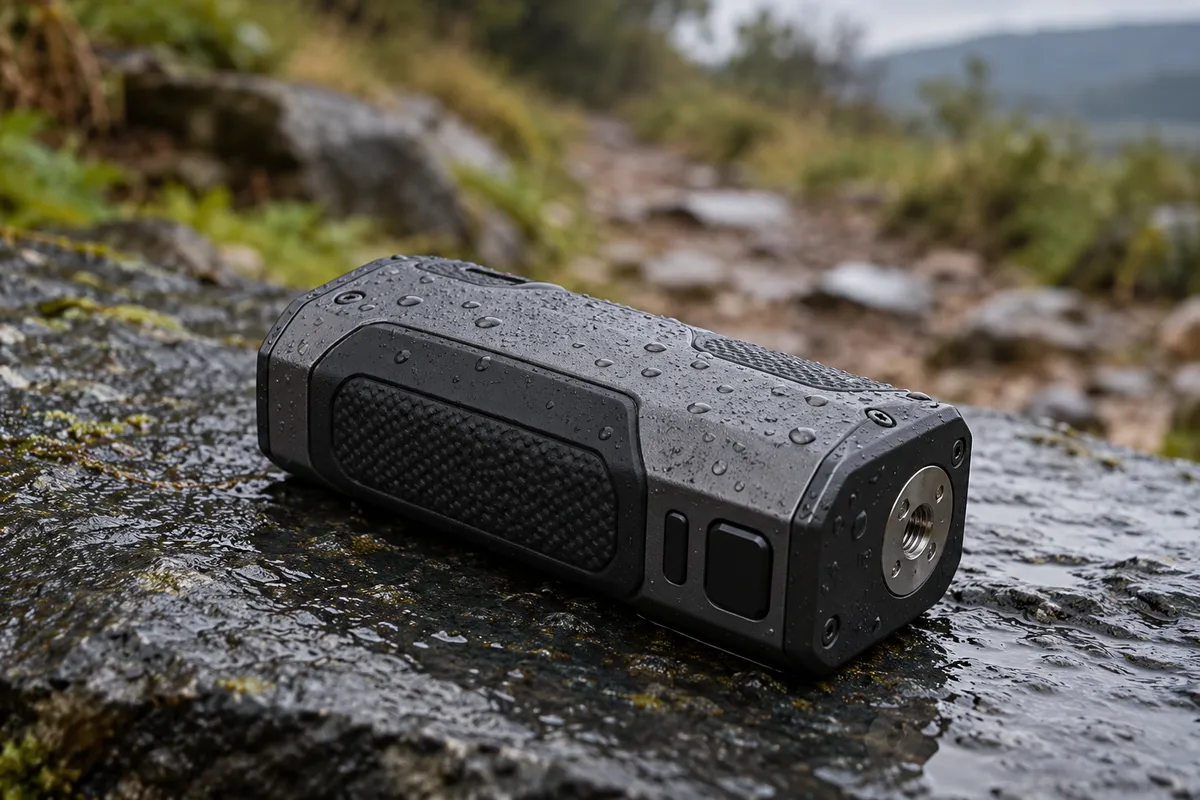
L200, Legend 3 or Legend 5? The three Geekvape Aegis Legend mods still on shelves suit different vapers. Lock, modes and coils, the choice by profile.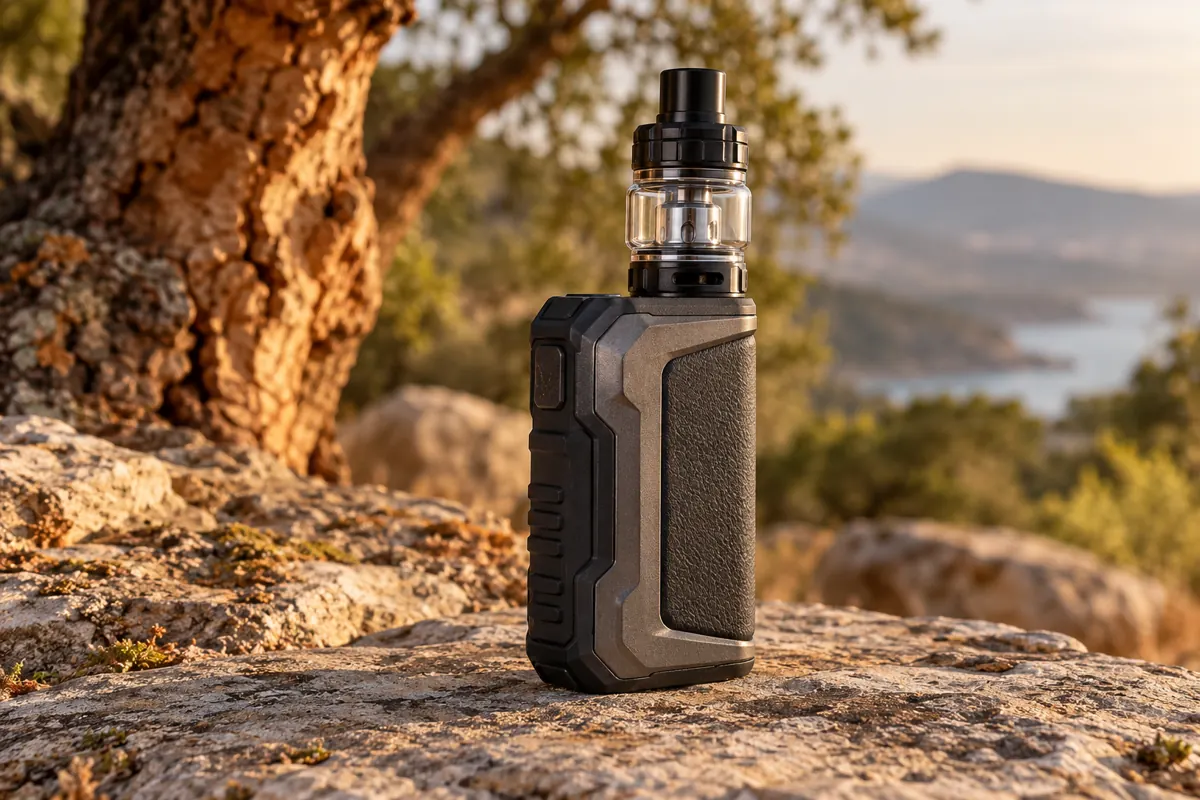 By Profile
Geekvape Aegis, which box mod suits which vaper
Mini 5, Solo 5 or Legend 5? Each Geekvape Aegis box mod fits a different vaper. Filling, settings and outdoor use, the profile that decides. By Profile