Box mod budget, which tier suits which vaper

Two devices that look almost identical on a shelf can sit worlds apart in cost. Nothing on the spec sheet explains what the extra money buys, and comparison tables line up wattage figures that hardly anyone ever uses. Choosing a box mod by budget therefore comes down to another question entirely, namely at what point each step up starts to earn its keep, and when you are paying for comfort you will never touch.
Which box mod budget suits which vaper
An entry-level box mod is enough for the large majority of vapers. The middle tier makes sense for heavy use or for days spent outdoors. The top tier is aimed at people who build their own coils and genuinely use temperature control.
That split holds because the core job, setting a power level and delivering it steadily, is covered by almost every model on sale today. What you pay for above the first tier is battery life, toughness, finer control and a better screen.
Put another way, the first tier decides whether the device works at all. The tiers above it decide whether it lasts, and whether it copes with the way your day actually runs.
What each tier really adds
Where one tier ends and the next begins shifts from year to year, yet the logic behind the three families stays the same. Here is what changes in practice as you move up.
The first tier gets the job done
At this level you find boxes with a built-in battery or a single cell, a simple screen and a variable wattage mode, sometimes nothing more. The usual electronic protections are there, and that is what matters most.
The compromise shows in the finish, in the size of the display and in the lack of firmware updates. For a vaper who stays at home and charges in the evening, those gaps barely register.
The middle tier survives long days and knocks
This is where dual batteries appear, along with water and dust resistance ratings, reinforced chassis and fast USB-C charging. A box at this level mostly changes life for people who vape away from home.
The gain is not in available power. It lies in the number of hours between charges and in how calmly the device shrugs off a drop onto the pavement.
The top tier sells precision and materials
Advanced chipsets, customisable power curves, reliable temperature control across several wire alloys and premium materials define this tier. It is built for people who wrap their own coils and want to fine-tune every build.
For someone who screws a tank with ready-made coils onto the device, those functions go unused, however well the box is made.
The real budget is more than the box
The most common mistake when weighing up two devices is to compare them without counting everything that orbits around them.
A box that takes external batteries means buying the cells and a dedicated charger. A built-in battery avoids that outlay, but the working life of the device is then tied to a cell that, in practice, cannot be replaced. Over three years, the balance often tips the other way.
Add the recurring cost of coils for your tank, which varies a great deal from one brand to another, and the figure on the shop label ends up weighing surprisingly little in the total. On the plus side, a well-kept box with external cells lasts several years, and the charging port and fire button usually give up before the electronics do.
In the UK, tanks and cartridges intended for nicotine liquid are capped at 2 ml under the Tobacco and Related Products Regulations 2016. Tank size is therefore not a lever that any tier can pull for nicotine liquid, which leaves battery life and build quality as the real dividing lines.
Three profiles, three trade-offs
These situations cover most real-life cases, and they rarely lead to the most expensive model.
The home vaper, who vapes indoors and charges every evening, has no need for dual batteries or water resistance. The first tier suits them, and the money saved is better spent on a good tank or on the liquids themselves.
The vaper on the move, out all day, should put battery life before anything else. Two swappable cells beat one large built-in battery, because a charged spare pair slips into a pocket while a wall socket does not travel with you.
The technical vaper picks a device for its chipset and very little else. They are the only one of the three for whom the top tier is not a comfort purchase, and they usually know already which model they want. At the opposite end, vapers with no interest in electronic regulation often look at a mechanical tube and everything it demands, which follows an entirely different logic.
Who a box mod does not suit
There is one profile for whom this format is the wrong choice at any budget, and that is the person who wants discretion and simplicity above everything else.
A box remains a bulky object with settings, a tank to fill and coils to change. Someone who wants a device to slip into a shirt pocket and use without any adjustment will be better served by a pod, even if that means giving up some battery life and vapour volume.
The format also disappoints anyone who wants a properly tight draw without thinking about it. That setting exists on a box, but it means choosing a suitable tank and adjusting the airflow, whereas many pods arrive calibrated that way from the start.
How to decide in three minutes
Start with the number of hours the device must last away from a plug. That figure on its own rules dual batteries, and therefore the middle tier, in or out.
Next, ask yourself whether you build your own coils. If the answer is no, the whole top tier drops off the shortlist without any regret.
Last, look up what the coils for your chosen tank cost and multiply by the number of changes you expect over a year. What remains is the real budget for the box itself, which is the right order in which to build it.
Frequently asked questions
A few points that product pages leave out and that buyers often discover only after the purchase.
Is a 200 watt box of any real use?
Rarely. The power you actually use depends on the coil fitted, and most setups run well below the maximum printed on the box. That figure is mostly a marketing argument.
Built-in battery or external cells, which is better?
A built-in battery keeps things simple and saves buying a charger. External cells let you replace a tired battery and head out with a fresh pair. It is a trade-off between immediate simplicity and long-term life.
Can the firmware on a box be updated?
On recent chipsets, yes, through the manufacturer’s utility and a USB cable. Updates fix bugs or add material profiles for temperature control, they do not add power.
Is a water-resistant box still sealed with the tank fitted?
The rating covers the body of the device. The tank has its own seals and its own tolerance. A box rated as water resistant copes with rain and dust, not with a prolonged dunking.
Can I take a box and spare batteries on a plane?
Yes, in cabin baggage only and never in the hold, with spare cells protected against short circuits, for instance in individual battery cases. Vaping on board is not allowed.
Choosing a box mod without paying for what you will not use
The best device is not the one with the longest feature list, it is the one whose settings you will use in full. Starting from how you really vape, rather than from the spec sheet, rules out half the models in the first minute.
Beyond that, the quality of your vape depends more on the tank and the liquid than on the box that powers them. Match the tier to your profile and a well-chosen box mod becomes a purchase that lasts for years.
Related reading
- MTL vape, who a tight draw really suits
- Aspire Nexi Pro, a pod built for long days away from a plug
- Sonder Q2 as a first pod, and who it suits
Editorial content for adults only. Vaping products usually contain nicotine, a highly addictive substance, and they are not for sale to under-18s in the United Kingdom. This guide is independent and is not an offer of sale.
Read next
 First Pick
Vaporesso GTX Go 80, which setup suits your draw
The Vaporesso GTX Go 80 has no wattage control. Which GTX coil, pod rotation and e-liquid to choose for the draw you are after, MTL or DTL.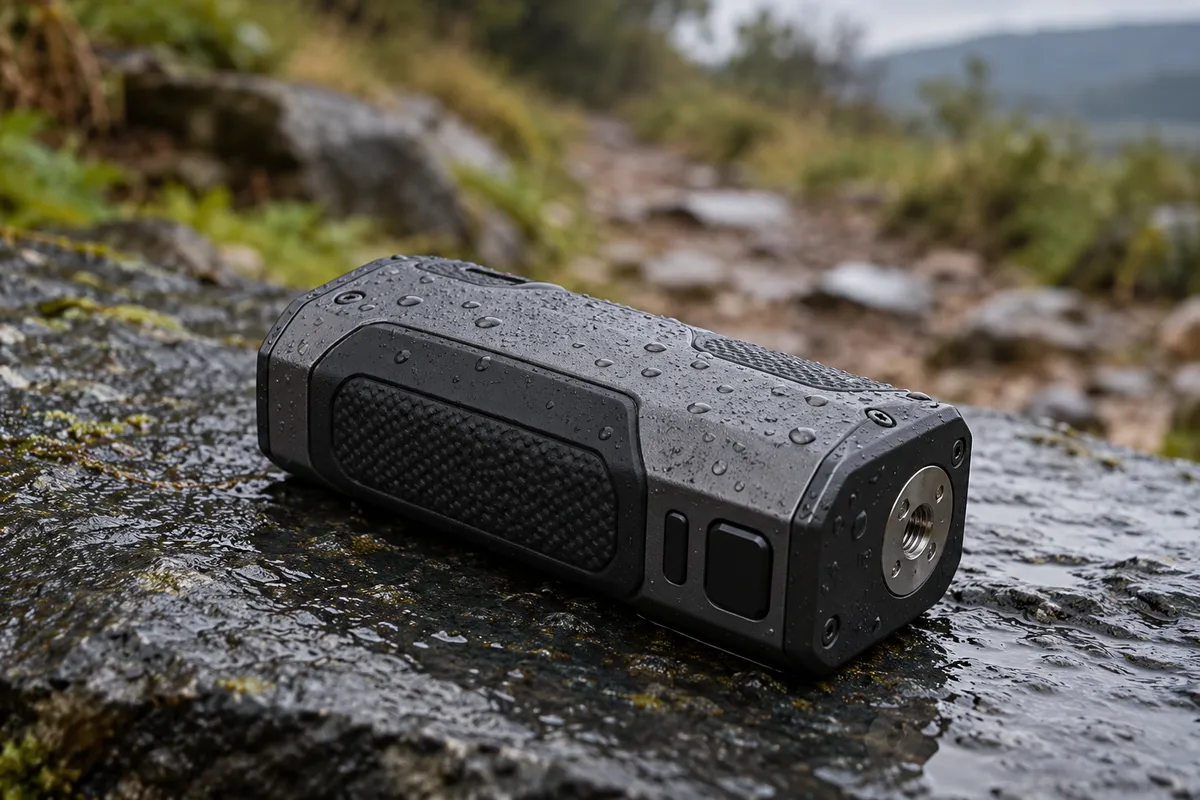 By Profile
Geekvape Aegis Legend, which generation suits you
L200, Legend 3 or Legend 5? The three Geekvape Aegis Legend mods still on shelves suit different vapers. Lock, modes and coils, the choice by profile. By Profile